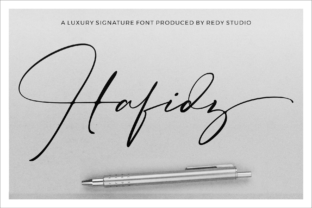
Hafidz: A Script Handwritten Font for Authentic Branding
There’s something oddly satisfying about opening a blank brand board and letting the design process unfold organically. That’s exactly what happened when I first tested Hafidz on a boutique identity project. As a brand designer, I often find myself torn between sleek, modern fonts and those that feel too casual or decorative. Hafidz landed somewhere in between—inkily expressive yet surprisingly readable, functional enough to work across multiple design assets without losing its character.
Hafidz for Boutique Branding and Logo Design
I used Hafidz as the primary typeface for a small handmade shop’s rebranding. The client wanted something warm, personal, and approachable. Hafidz fit perfectly. Its inky, handwritten feel gave the logo a sense of authenticity without being overly whimsical. I paired it with a clean sans serif font for body text, creating a balance that felt both professional and inviting.
Testing Hafidz on a logo draft was an eye-opener. It has a natural flow that mimics real handwriting, making it ideal for signature-style logos. I found it particularly effective when used in combination with subtle ink textures or hand-drawn elements. The font’s expressiveness adds personality, but it never sacrifices legibility—even at smaller sizes.
Hafidz for Packaging and Product Labels
When designing packaging for a new skincare line, I needed a font that could convey both elegance and approachability. Hafidz worked beautifully on product labels. Its expressive strokes added a touch of sophistication, while its readability ensured the information was clear and easy to digest. I even used it on the back of the packaging for taglines, where its natural rhythm made the text feel more like a conversation than a sales pitch.
One thing I noticed is that Hafidz performs well in both print and digital formats. Whether it’s printed on a box or displayed on a website, it maintains its charm and clarity. However, I would caution against using it for long blocks of text. It’s best suited for short phrases, headlines, or accents rather than entire paragraphs.
Hafidz for Social Media Graphics and Web Design
For a creative studio’s social media refresh, I experimented with Hafidz on Instagram posts and website headers. Its script style added a personal touch that aligned with the brand’s artistic vibe. I found that using Hafidz in combination with a bold sans serif font created a striking contrast that caught attention without overwhelming the viewer.
On the web, Hafidz works best when used sparingly. It can be a great headline font or a decorative element, but it’s not ideal for body copy. I recommend testing it in different contexts before committing to a full redesign. Also, make sure to check the font’s licensing if you’re using it for commercial projects or digital products.
Hafidz for Business Cards and Print Materials
When designing business cards for a local restaurant, I used Hafidz for the name and tagline. The result was a card that felt both professional and handcrafted. I paired it with a simple, modern sans serif font for contact details, which kept the overall design balanced and easy to read.
Hafidz also shines in editorial design. I used it on a flyer for a local art event, where its expressive nature helped set the tone of the event. It’s important to note, though, that Hafidz isn’t the most versatile font for all applications. For formal corporate branding or long-form content, a more structured typeface might be better suited.
Hafidz for Font Pairing and Design Flexibility
One of the strengths of Hafidz is its ability to pair well with other fonts. I’ve successfully used it alongside serif fonts for a classic, elegant look, and with sans serifs for a more contemporary feel. It’s also great for accenting other script fonts, adding a layer of visual interest without overpowering the design.
When working with Hafidz, I recommend exploring its alternate styles and ligatures. These can add depth and variety to your designs, especially when creating mockups or templates. Be sure to check if the font includes multilingual support, as this can be useful for international clients or global campaigns.
Finally, always verify the font’s licensing before using it in client work. Hafidz is a premium font, and understanding its commercial use rights is essential for any designer looking to maintain professionalism and avoid legal issues.